Free Download Dax Convert String To Date For Mac
The Definitive Guide to DAX (Business intelligence with Microsoft Excel, SQL Server Analysis Services, and Power BI) is the most comprehensive and authoritative guide to Microsoft’s DAX language for business intelligence and analytics. While other books cover only the basics, this guide offers. In DAX, there is no OOTB function for us to get local time zone. So we need to calculate the UTC datetime value use known time zone. Suppose the local time zone is UTC-8, to convert the UTC value to local datetime value, we can specify the DAX expression like below. However, if the current date/time settings represent dates in the format of Day/Month/Year, then the same string would be interpreted as a datetime value equivalent to August 1st of 2009. Example The following example gets the date from the [HireDate] column, adds 1, and displays the weekday corresponding to that date. I have a date string that fails to import because it is in a different format to that expected my the machines locale (i.e. US dates to a UK machine). How do I tell DAX to convert this string into a date, but using a specified format or locale, different to the machines default.
If I use NOW() in my report, I will get different times depending on whether where the refresh takes place. If via the desktop - NOW() is PST. If I use the schedule refresh, NOW() comes back in UTC time. M code using DateTime.LocalNow() has the expected same effect. Is there M code to generate UTC time, then I can use your formula above to show the PST refresh time in the report?
• tahoedenizen (Jun 9, 2016) This is certainly the definitive guide to the DAX language, which is growing in popularity since it can be used in Excel, Power BI, SQL Server Analysis Services, and other Microsoft tools. DAX is quite easy to use in common cases such as creating a calculated column, but in more advanced cases it offers incredible power, provided you know what you're doing. For users who want to go beyond 'recipes' and really understand how DAX works, this book provides clear and thorough explanations of the concepts underlying DAX.
Dddd Displays the day as a full name (for example, Sunday). M Displays the month as a number without a leading zero (for example, January is represented as 1). Use%M if this is the only character in your user-defined numeric format. MM Displays the month as a number with a leading zero (for example, 01/12/01). MMM Displays the month as an abbreviation (for example, Jan). MMMM Displays the month as a full month name (for example, January).
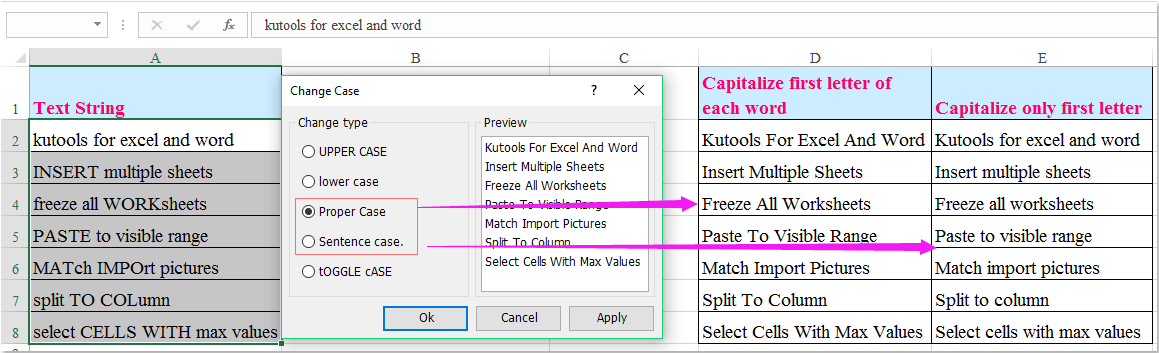
Different formatting can be obtained by using a different case. Changing Data Types of DAX Formula Outputs In DAX formulas, the data type of the output is determined by the source columns and you cannot explicitly specify the data type of the result. This is because the optimal data type is determined by Power Pivot.
ENDOFQUARTER() Returns the last day of the quarter in the specified date column. ENDOFYEAR() Returns the last day of the year in the specified date column. PARALLELPERIOD(,,) This function moves the specified number of intervals and then returns all contiguous full months which contain any values after that shift.
Contains the details needed to truly understand DAX. Alberto and Marco are Rock Stars for all they have done to develop the DAX community. Mcnally (Oct 18, 2016) The Definitive Guide to DAX is the BEST, most in-depth treatment of the DAX language and DAX engine (VertiPaq). It is best suited for someone who already is familiar with the DAX language. Every aspect of the DAX language is introduced in a logical progression, including Evaluation Contexts, Time Intelligence, and Relationships. The insight and low-level details that Marco and Alberto provide are unique to this book.
EARLIER(, ) Returns the current value of the specified column in an outer evaluation pass of the mentioned column. EARLIEST() Returns the current value of the specified column in an outer evaluation pass of the mentioned column FILTER(,) Returns a table that represents a subset of another table or expression. RELATED() Returns a related value from another table RELATEDTABLE() Follows an existing relationship, in either direction, and returns a table that contains all matching rows from the specified table. VALUES() Returns a one-column table that contains the distinct values from the specified column. This function is similar to DISTINCT function, but VALUES function can also return Unknown member ALLNONBLANKROW(?) Returns all the rows, except for blank rows, in a table or column, and disregards any context filters that might exist. FIRSTNONBLANK(,) Returns the first non-blank values in column, filtered by expression. Logical functions Function Description AND(,,) Checks whether all arguments are TRUE, and returns TRUE if all arguments are TRUE.
=MINUTE(Orders[TransactionTime]) The following example returns 45, which is the number of minutes in the time 1:45 PM. =MINUTE('March 23, 2008 1:45 PM') ↑ MONTH Returns the month as a number from 1 (January) to 12 (December). In contrast to Microsoft Excel, which stores dates as serial numbers, DAX uses a datetime format when working with dates. You can enter the date used as argument to the MONTH function by typing an accepted datetime format, by providing a reference to a column that contains dates, or by using an expression that returns a date. Values returned by the YEAR, MONTH and DAY functions will be Gregorian values regardless of the display format for the supplied date value. For example, if the display format of the supplied date is Hijri, the returned values for the YEAR, MONTH and DAY functions will be values associated with the equivalent Gregorian date.
This function is available for several connectors. For more information, see. Examples: DATEPARSE ('dd.MMMM.yyyy', '15.April.2004') = #April 15, 2004# DATEPARSE ('h'h' m'm' s's', '10h 5m 3s') = #10:05:03# FLOAT FLOAT(expression) Casts its argument as a floating point number. Examples: FLOAT(3) = 3.000 FLOAT([Age]) converts every value in the Age field to a floating point number. INT INT(expression) Casts its argument as an integer.
FORMAT(, ) Converts a value to text according to the specified format. Time Intelligence Functions Function Description CLOSINGBALANCEMONTH(,,) Evaluates the specified expression at the calendar end of the given month. The given month is calculated as the month of the latest date in the dates argument, after applying all filters. CLOSINGBALANCEQUARTER(,,) Evaluates the specified expression at the calendar end of the given quarter. The given quarter is calculated as the quarter of the latest date in the dates argument, after applying all filters.
=EXACT([Column1],[Column2]) ↑ FIND Returns the starting position of one text string within another text string. FIND is case-sensitive. Whereas Microsoft Excel has multiple versions of the FIND function to accommodate single-byte character set (SBCS) and double-byte character set (DBCS) languages, PowerPivot for Excel uses Unicode and counts each character the same way; therefore, you do not need to use a different version depending on the character type. Syntax FIND(,, ) number. The number you want to round and convert to text, or a column containing a number. (optional) The number of digits to the right of the decimal point; if omitted, 2. (optional) A logical value: if 1, do not display commas in the returned text; if 0 or omitted, display commas in the returned text. Returns a number represented as text.
The text you want to repeat. A positive number specifying the number of times to repeat text. Returns a string containing the changes. Example: Repeating Literal Strings The following example returns the string, 85, repeated three times. =REPT('85',3) Example: Repeating Column Values The following example returns the string in the column, [MyText], repeated for the number of times in the column, [MyNumber]. Because the formula extends for the entire column, the resulting string depends on the text and number value in each row. =REPT([MyText],[MyNumber]) MyText MyNumber CalculatedColumn1 Text 2 TextText Number 0 85 3 858585 ↑ RIGHT RIGHT returns the last character or characters in a text string, based on the number of characters you specify.
Returns a string containing value formatted as defined by format_string. Predefined Numeric Formats The following table identifies the predefined numeric format names. These may be used by name as the style argument for the FORMAT function: Format specification Description 'General Number', 'G', or 'g' Displays number with no thousand separators. 'Currency', 'C', or 'c' Displays number with thousand separators, if appropriate; displays two digits to the right of the decimal separator. Output is based on system locale settings.
Yyy Displays the year in four-digit numeric format. Yyyy Displays the year in four-digit numeric format. Z Displays the timezone offset without a leading zero (for example, -8). Use%z if this is the only character in your user-defined numeric format. Zz Displays the timezone offset with a leading zero (for example, -08) zzz Displays the full timezone offset (for example, -08:00) Remarks Formatting strings are case sensitive.
OPENINGBALANCEQUARTER(,,) Evaluates the specified expression at the calendar end of the quarter prior to the given quarter. The given quarter is calculated as the quarter of the latest date in the dates argument, after applying all filters. OPENINGBALANCEYEAR(,,) Evaluates the specified expression at the calendar end of the year prior to the given year.
Description Returns a string of characters from the middle of a text string, given a starting position and length. Syntax MID (,, ) Parameters Sr.No. Parameter & Description 1 text The text string from which you want to extract the characters, or a column that contains text. 2 start_num A whole number representing the position of the first character you want to extract.
I spent an hour on this for you. LOL Good Luck, Daniel. Lojack for laptops download. Hi, I am guessing that your data must be in a CSV or TEXT file? Until the Power BI team provide functionaility to work with UK dates, I suggest one of the following methods: 1. Create a reference table (Excel is the easiest) that will allow you to convert your UK format dates to US dates within PowerBI Desktop. This is the easiest way to do it and what I would recommend.
's' Formats the date and time as a sortable index. For example, 2008-03-12T11:07:31. The s character displays the seconds in a user-defined time format. For more information, see User-Defined Date/Time Formats (Format Function). 'u' Formats the date and time as a GMT sortable index. For example, 2008-03-12 11:07:31Z.
For details on the behavior of an individual function or operator, see the list of types of functions on the page. Syntax BLANK() Example The following example illustrates how you can work with blanks in formulas. The formula calculates the ratio of sales between the Resellers and the Internet channels. However, before attempting to calculate the ratio the denominator should be checked for zero values. If the denominator is zero then a blank value should be returned; otherwise, the ratio is calculated. =IF( SUM(InternetSales_USD[SalesAmount_USD])= 0, BLANK(), SUM(ResellerSales_USD[SalesAmount_USD])/SUM(InternetSales_USD[SalesAmount_USD]) ) The table shows the expected results when this formula is used to create a PivotTable. Reseller to Internet Sales Ratio Column Labels Row Labels Accessories Bikes Clothing Grand Total 2001 2.65 2.89 2002 3.33 4.03 2003 1.04 2.92 6.63 3.51 2004 0.41 1.53 2.00 1.71 Grand Total 0.83 2.51 5.45 2.94 Note that, in the original data source, the column evaluated by the BLANK function might have included text, empty strings, or nulls.
This function is a case-sensitive. • FIXED: This function rounds a number to the specified number of decimals and returns the text result. We can specify the result format with commas or without commas.  • FORMAT: This function converts a value to text based on the input format. • LEFT: This function returns a specified number of characters from the start of a text string.
=DATE(2008,1,2) month. A number representing the month or a calculation according to the following rules. If month is a number from 1 to 12, then it represents a month of the year. 1 represents January, 2 represents February, and so on until 12 that represents December. If you enter an integer larger than 12, the following computation occurs: the date is calculated by adding the value of month to the year. For example, if you have DATE( 2008, 18, 1), the function returns a datetime value equivalent to June 1st of 2009, because 18 months are added to the beginning of 2008 yielding a value of June 2009.
Hence, if any composite keys exist in a table in the data source, you need to combine them into a single key column for the table in the Data Model. You can use the DAX function CONCATENATE to combine two columns into a single column in a table in the Data Model. DAX function CONCATENATE joins two text strings into one text string. The joined items can be text, numbers, or Boolean values represented as text or a combination of those items. You can also use a column reference if the column contains appropriate values. = CONCATENATE ([Column1], [Column2]) DAX CONCATENATE function accepts only two arguments. If any of the arguments is not of text data type, it will be converted to text.
Handles text and non-numeric values. AVERAGEX(, ) Calculates the average (arithmetic mean) of a set of expressions evaluated over a table COUNT() The COUNT function counts the number of cells in a column that contain numbers. COUNTA() The COUNTA function counts the number of cells in a column that are not empty. COUNTAX(, ) The COUNTAX function counts nonblank results when evaluating the result of an expression over a table. COUNTBLANK() Counts the number of blank cells in a column. COUNTROWS() The COUNTROWS function counts the number of rows in the specified table, or in a table defined by an expression. COUNTX(, ) Counts the number of rows that contain a number or an expression that evaluates to a number, when evaluating an expression over a table.
The time separator separates hours, minutes, and seconds when time values are formatted. The actual character used as the time separator in formatted output is determined by your system settings. / (forward slash character) Date separator. In some locales, other characters may be used to represent the date separator. The date separator separates the day, month, and year when date values are formatted. The actual character used as the date separator in formatted output is determined by your system settings. E-, E+, e-, e+ Scientific format.
'Short Time' or 't' Displays a time using your current culture's short time format. For example, 11:07 AM. The t character displays AM or PM values for locales that use a 12-hour clock in a user-defined time format. For more information, see User-Defined Date/Time Formats (Format Function).
MAX() Returns the largest numeric value in a column. MAXA() Returns the largest value in a column.
Syntax TIME(hour, minute, second) Returns a time ( datetime). Examples The following examples both return the time, 3:00 AM: =TIME(27,0,0) =TIME(3,0,0) The following examples both return the time, 12:30 PM: =TIME(0,750,0) =TIME(12,30,0) The following example creates a time based on the values in the columns, intHours, intMinutes, intSeconds: =TIME([intHours],[intMinutes],[intSeconds]) ↑ TIMEVALUE Converts a time in text format to a time in datetime format. Time values are a portion of a date value and represented by a decimal number. For example, 12:00 PM is represented as 0.5 because it is half of a day.
Convert String To Date In Php
To display a character that has special meaning as a literal character, precede it with a backslash ( ). The backslash itself isn't displayed. Using a backslash is the same as enclosing the next character in double quotation marks. To display a backslash, use two backslashes ( ). Examples of characters that can't be displayed as literal characters are the date-formatting and time-formatting characters (a, c, d, h, m, n, p, q, s, t, w, y, /, and:), the numeric-formatting characters (#, 0,%, E, e, comma, and period), and the string-formatting characters (@, &,, and!).